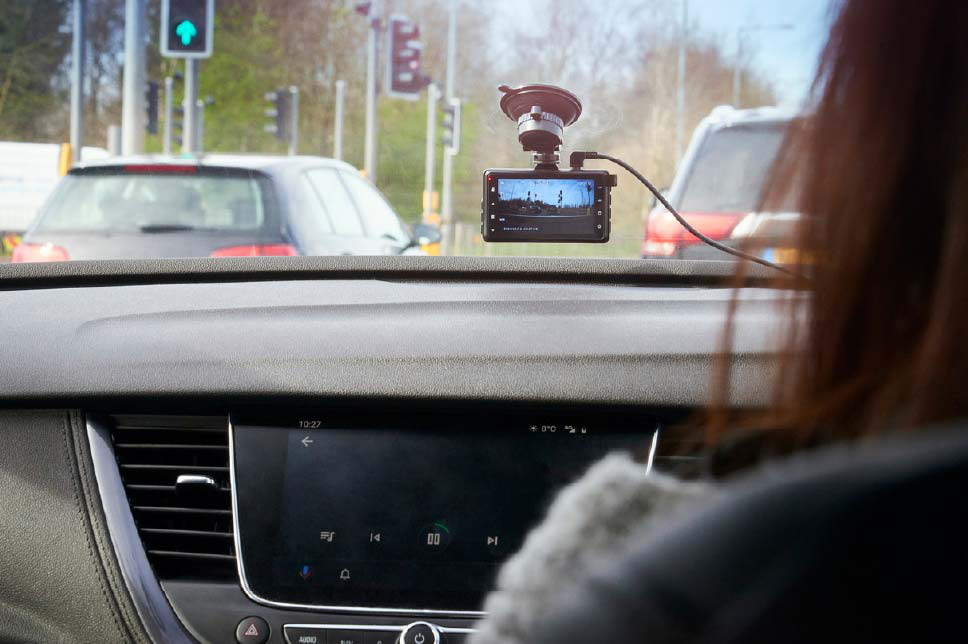
Figures published in August 2024 by Nextbase, which runs the UK’s National Dash Cam Safety Portal, suggest that around 70% of UK drivers believe that all cars should be fitted with dash cams.
But what is a dash cam? And why should you consider getting one?
What’s a dash cam?
A dash cam is a small video camera fitted to your windscreen to record video as you drive. Some dashcams come with impact sensors or a parking mode. If this feature is enabled, the camera will start recording if someone bumps into or tries to tamper with your car when it’s parked.
What are the benefits of having a dash cam?
The potential benefits of installing a dash cam include deterring thieves and vandals, recording damage to your car when you’re not with it, and documenting details of an accident, which can be helpful if you need to make an insurance claim.
It’s a bit like always having an independent witness with you. However, it’s important to remember that, while it can help support your version of events, dash cam footage may also highlight times when you were in the wrong.
Different types of dash cams
There are three main types of dash cams available
- Front-view cameras – which, as the name suggests, record the road in front of the car.
- Front and rear-view cameras – generally more expensive, but able to record footage both from the front and the back of the car – these can be useful if you’ve been hit in the rear.
- Cabin-view cameras – typically used by taxi firms or driving instructors, this type of dash cam records footage from inside the vehicle.
When choosing a dash cam, there are a few things you need to consider:
- Video quality – with 4k offering the best clarity
- Viewing angle – wide-angle cameras will capture more of what’s happening
- Wi-Fi connectivity – this will make it easier to view your footage
- Additional features – such as GPS tracking for speed and location, or parking mode
How to fit a dash cam
To get the most out of your dash cam, you may want to consider hardwiring it to your car. This is a more involved way of installing it, and you may need a professional to fit it for you.
The benefits of hardwiring include activating features such as parking mode, as a hardwired camera can still record even when the engine is off. If you do go down this route, it’s a good idea to let your insurer know, as some providers may class this as a vehicle modification.
Alternatively, a simpler way to install a dash cam is to attach it to your windscreen or dashboard and plug it in using your car’s 12V cigarette lighter.
Whichever option you choose, it’s important to remember that there are strict rules around positioning a dash cam safely, so that it doesn’t obstruct the driver’s view.
Further guidance can be found on the government website.
Are dash cams legal?
Provided they’ve been positioned correctly, dash cams for private use are legal in the UK. However, there are a few things to remember:
- Private use doesn’t mean you can share dashcam footage through channels like social media. Sharing other people’s faces and even number plates without their consent could be considered a breach of privacy law.
- If your dash cam is used to record sound or images inside the vehicle, you need to let everyone in the car know they’re being recorded – again, to avoid breaching privacy laws.
- Dash cam footage can help settle insurance claims, and police can also request it as evidence in legal disputes.
If you want to find out more about car security, check out our Quick Tips for Car Security blog.